

Drug Take Back
Safe medication disposal helps protect your home, your loved ones, and the community. Medication take back boxes provide a secure way to get rid of unused, expired, or unwanted medications so they are not accidentally taken, misused, or left in places where others can access them.
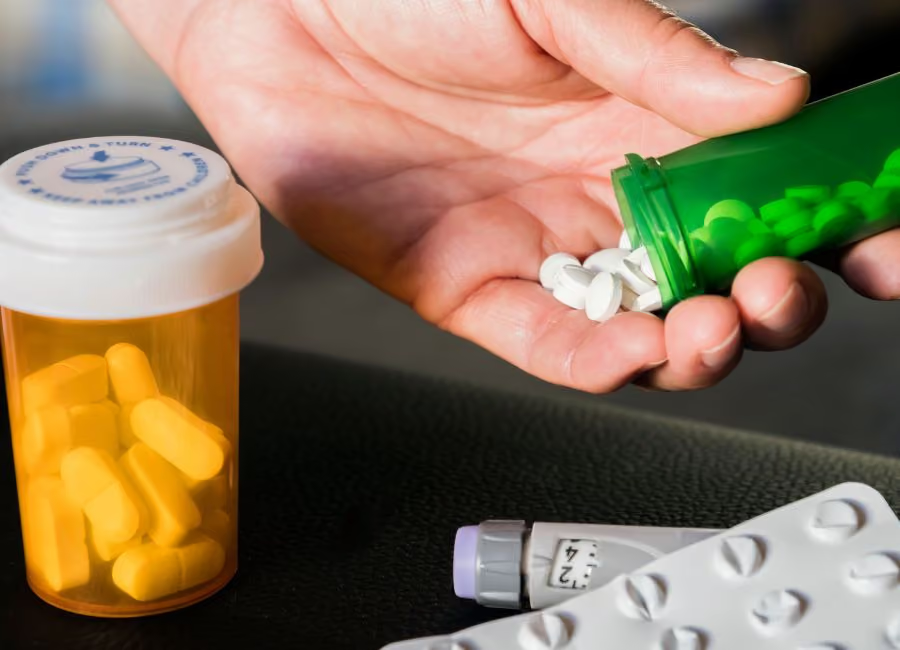
Medication Take Back Box Locations in Fayette County
The boxes allow residents to anonymously deposit unused, unwanted, and expired medications.
Brownsville Police Department
200 Second Street Brownsville, PA 15417
724-785-5761
Monday-Friday, 8AM-3PM
Connellsville Police Department
110 N Arch St, Connellsville, PA 15425
724-628-2020
Sunday-Saturday, 8AM-8PM
Masontown Borough Police Department
1 East Church Avenue Masontown, PA 15461
724-583-7770
Please contact location for hours of availability.
Perryopolis Police Department
721 Cemetery Road Perryopolis, PA 15473
724-736-0700
Monday-Friday, 7AM-3PM
Saturday-Sunday, 10AM-2PM
Redstone Township Police Department
225 Twin Hills Road Grindstone, PA 15442
724-246-1910
Monday-Friday, 8AM-2PM
Uniontown Hospital
500 W Berkeley St Uniontown, PA 15401
724-430-5919
24 hours/7 days a week
Uniontown Police Department
45 East Penn Street Uniontown, PA 15401
724-437-3430
24 hours/7 days a week
Frequently Asked Questions
• Almost all prescription drugs involved in overdoses are originally prescribed by physicians
• Prescription drug abuse has quadrupled in the past ten years; it now results in more deaths than all illicit street drugs combined.
• Prescription drug abuse is growing among adolescents in Pennsylvania: 13 percent of high school-aged children have abused opioid pain relievers, 6 percent tranquilizers, and 12 percent amphetamines (Adderal and Ritalin)
• Improper disposal of prescription drugs could create environmental hazards impacting groundwater and rivers and harming wildlife.
• All pharmaceutical drugs that are being disposed of need to be in a sealed container such as the original bottle or a zip-lock bag.
• Liquid pharmaceuticals should remain in the original container.
• Personal information should be removed or blotted out.
• Prescription and over-the-counter solid medications
• Tablets and capsules
• Pet medicines
• The boxes accept prescription and over-the-counter solid medications (tablets and capsules), liquid medications, inhalers, creams, ointments, nasal sprays and pet medications
• Intravenous solutions
• Injectables, syringes, and needles (i.e. EpiPens)
• Hydrogen peroxide
• Compressed cylinders or aerosols (e.g., asthma inhalers)
• Iodine-containing medications
• Thermometers• Alcohol & illicit drugs (i.e. marijuana, heroin, LSD, etc.)